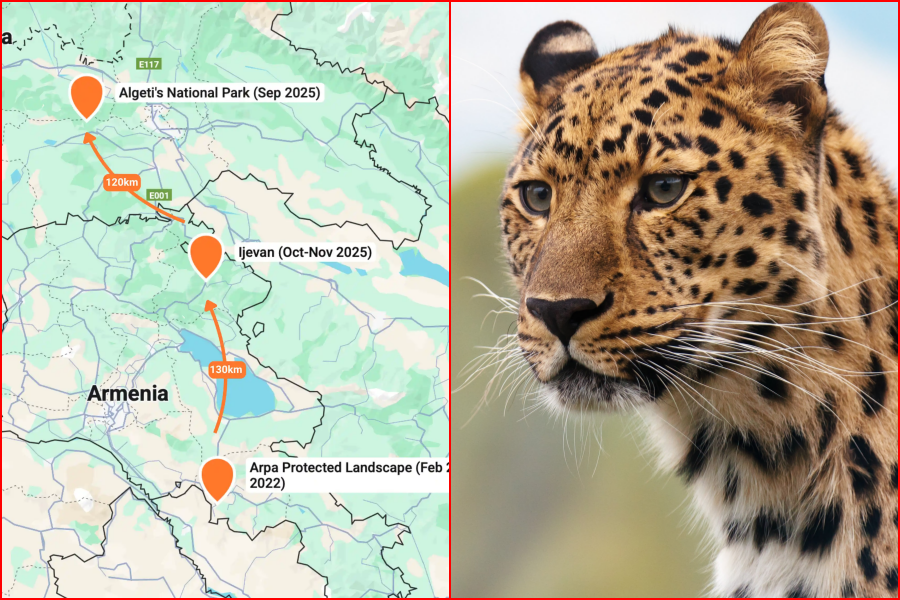
An endangered leopard that survived a devastating injury near Armenia’s border with Azerbaijan has demonstrated remarkable resilience by traveling nearly 200 miles into neighboring Georgia.
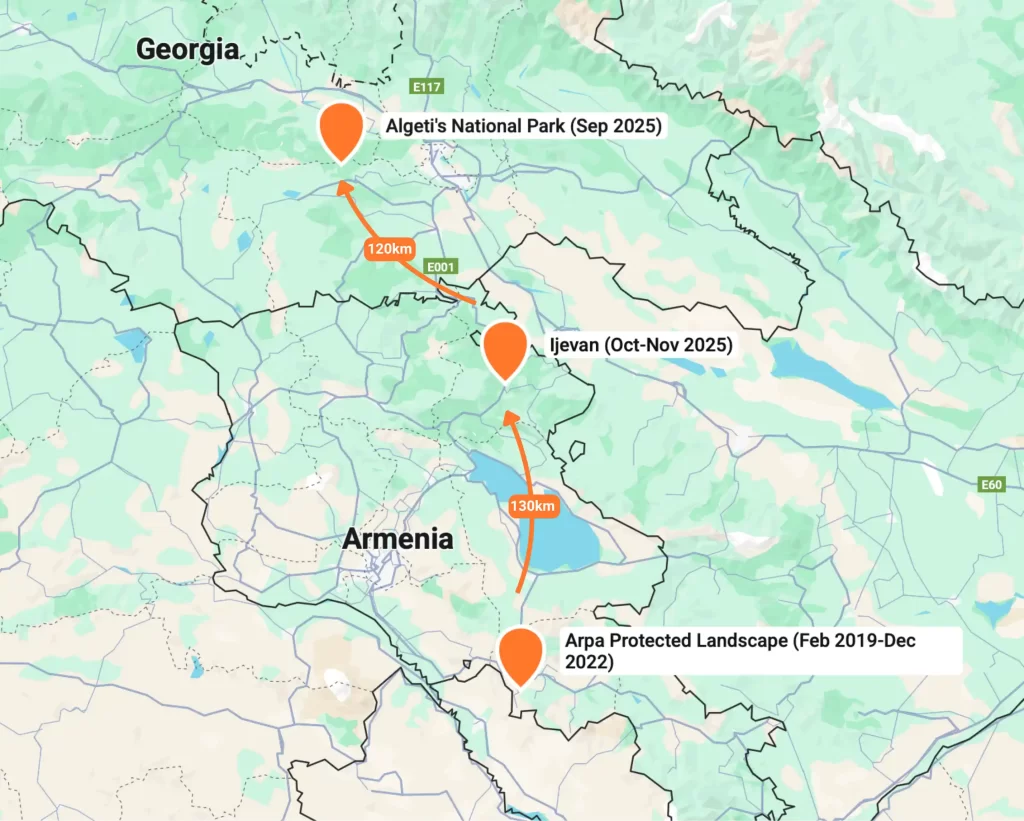
The male Caucasian leopard, known as Aren, was photographed by a wildlife monitoring camera in Georgia in 2025, years after conservationists first documented him in southern Armenia.
His journey, detailed in an October 30, 2026, New York Times report and subsequently reported by various media sites like PEOPLE has drawn attention to efforts to restore leopard populations across the southern Caucasus.
Surviving an Injury in a Conflict-Affected Landscape
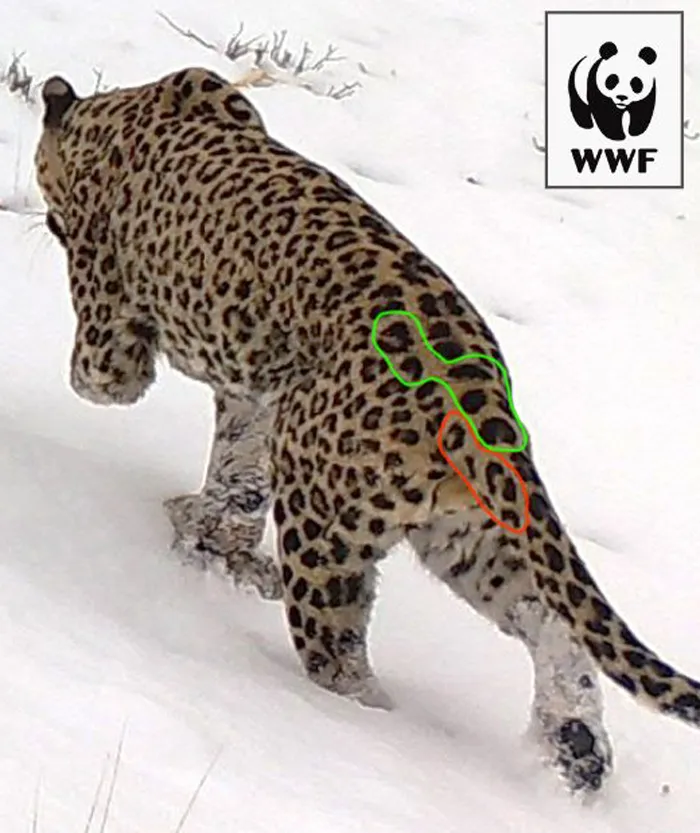
Aren lost part of his front left leg after encountering a land mine in a mountainous region affected by decades of conflict. Despite the injury, he continued living independently in the wild.
In 2019, ranger Samvel Karapetyan encountered a leopard near the Armenian village of Areni. Camera-trap images obtained several months later allowed conservationists to identify the animal through his distinctive coat markings and document his missing limb.
Aren continued appearing in wildlife camera records in Armenia in subsequent years, including in 2022.
Adapting to Life on Three Legs
Leopards depend on stealth, strength and agility to capture prey, making the loss of a limb a potentially life-threatening injury.
Conservationists reported that Aren appeared to compensate for his reduced mobility by relying more heavily on ambush hunting. His continued survival and ability to cross rugged mountain landscapes demonstrated that he remained capable of finding food and moving through his habitat.
Researchers believe his movement into Georgia may have been connected to the search for territory as leopard numbers gradually increased in southern Armenia.
Wildlife Corridors Offer Hope for Leopards
Caucasian leopards were severely depleted in Armenia by hunting and other pressures. A camera-trap photograph in 2005 helped confirm their continued presence, and conservationists now estimate that approximately eight to 10 leopards may inhabit the country.
Habitat protection efforts in Armenia’s Vayots Dzor province have linked forests, reserves and community-managed land into a wildlife corridor covering approximately 217 square miles.
These connections allow wide-ranging animals to move between suitable habitats, potentially improving access to prey, mates and new territories.
Aren’s Current Whereabouts Remain Unknown
Although Aren has not been documented again since his appearance in Georgia in 2025, conservationists continue to monitor the region. Another male leopard was photographed in Armenia in October 2026.
Aren’s survival does not establish that every injured leopard can overcome similar challenges. However, his journey provides an encouraging example of the importance of protecting connected landscapes where endangered predators can survive and disperse across national borders.
The account of Aren’s journey was first reported by WWF Armenia

Francis from India is a Black belt Taekwondo boxer with a passion for writing articles froms Science to animals.