Could We All Be Living in a Simulation? The Science Behind This Mind-Bending Idea
Imagine waking up tomorrow and learning that everything you’ve ever known – your memories, your relationships, even your deepest emotions – are the product of an unimaginably advanced computer program. Not a metaphor, not a philosophical exercise, but literal code running on some cosmic server. That sounds like the plot of a sci‑fi movie, but a surprising number of scientists and philosophers take this possibility seriously.
When I first dug into the simulation hypothesis, I expected fringe speculation. Instead, I found sober arguments, real math, and serious people debating whether our reality might be more like an ultra‑high‑resolution video game than a physical universe. It’s unsettling, a little thrilling, and weirdly practical: if reality might be simulated, does that change how we live, what we value, or what we think “real” even means?
The Core Idea: What Is the Simulation Hypothesis Really Saying?
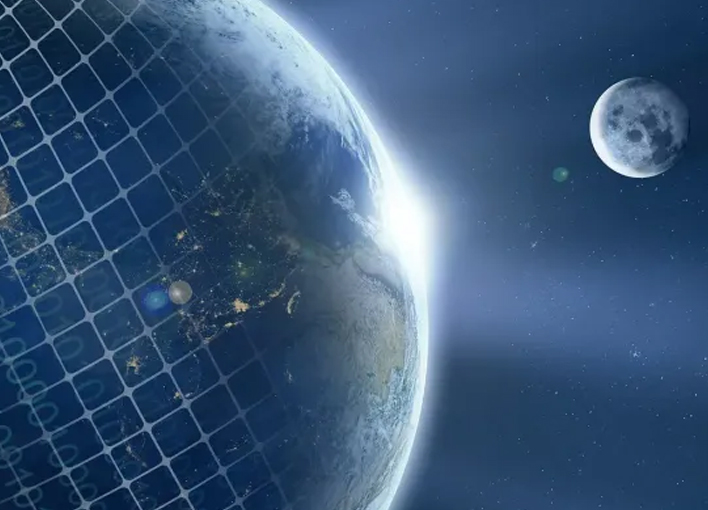
At its heart, the simulation hypothesis is surprisingly simple: future civilizations could have computers so powerful that they can simulate entire universes, including conscious beings who don’t realize they’re simulated. If that’s possible, the argument goes, then simulated worlds could vastly outnumber “base reality,” making it statistically more likely that we’re in a simulation than the original, physical world. Think of it like nesting dolls: one real universe at the bottom, potentially followed by countless digital copies stacked on top.
This isn’t about magic; it’s about computation. Your brain runs on electrochemical signals; in principle, a powerful enough computer could model those signals with staggering precision. If every atom, every neuron, every interaction could be simulated, then from the inside, the world would feel just as solid as ours does. The unsettling twist is that, if simulations are cheap and easy for post‑human civilizations, then our universe being a simulation becomes less like wild speculation and more like a numbers game we might already be losing.
Nick Bostrom’s Trilemma: Why Some Think It’s Likely
The modern version of the simulation idea got a serious boost from philosopher Nick Bostrom, who framed it as a logical trilemma rather than a wild guess. He argued that at least one of three things must be true: either civilizations like ours tend to go extinct before becoming technologically mature, or advanced civilizations almost never run ancestor simulations, or we are almost certainly living in a simulation right now. It’s not claiming to know which option holds; it’s forcing us to consider that avoiding the simulation conclusion has a cost.
Once you sit with that structure, it stops feeling like a late‑night dorm room question and starts to sound like a hard fork in the road. If humanity survives long enough and gains the ability to simulate worlds like ours, and if we choose to use that ability often, then simulated realities would vastly outnumber the original. In that scenario, being in base reality becomes like winning a cosmic lottery. Some people hate that implication and push back on his assumptions, but the trilemma is unnerving because you can’t dismiss it without taking a stand on our future, our ethics, or the limits of technology.
Cosmic Glitches: Are There Clues in Physics and Cosmology?
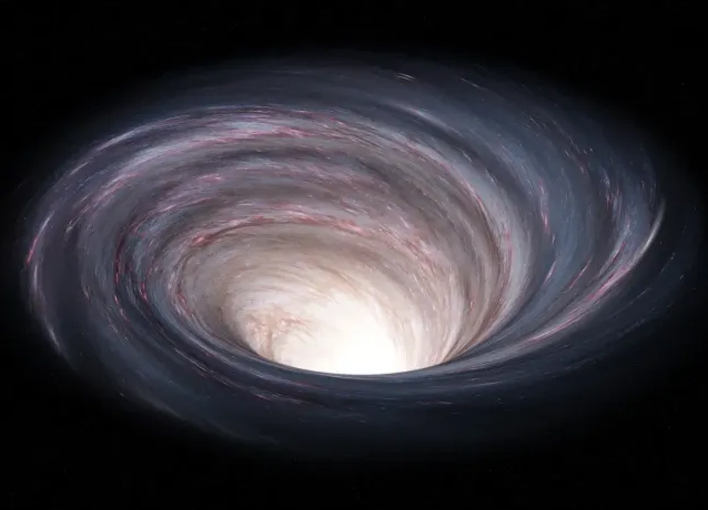
Once the idea of a simulation is in your head, it’s tempting to see “glitches” everywhere: strange coincidences, unexplained phenomena, or parts of physics that feel oddly game‑like. Some researchers have wondered whether our universe’s apparent limits – like the speed of light, or the grainy, quantized nature of reality at the smallest scales – might resemble constraints of a computational system. The idea is a bit like bumping into the rendering limits of a video game, where the world only loads in high detail where the player is looking.
Modern physics does hand us some eerie patterns. Quantum mechanics behaves in ways that look vaguely like information processing, and certain constants of nature seem finely tuned for life, as if parameters had been carefully set. A few theoretical physicists have speculated whether the universe could be understood as a kind of information structure, not solid stuff in the old‑fashioned sense. That doesn’t prove we’re simulated – it may simply be how reality works – but it adds fuel to the intuition that the universe is more code‑like than we once imagined.