How Komodo Dragons Can Smell Blood From Miles Away
In the remote islands of Indonesia, an ancient predator possesses one of nature’s most extraordinary hunting abilities. The Komodo dragon, with its massive frame and deadly bite, harbors a sensory superpower that seems almost mythical: the ability to detect blood from miles away. This remarkable adaptation has helped these apex predators dominate their ecosystem for millions of years. While many believe these reptiles can smell blood from incredible distances, the science behind their sensory capabilities reveals a fascinating and complex reality that goes beyond simple olfaction. Let’s explore how these living dragons track their prey with such astonishing precision and what makes their sensory system one of the most sophisticated in the animal kingdom.
The Legendary Komodo Dragon
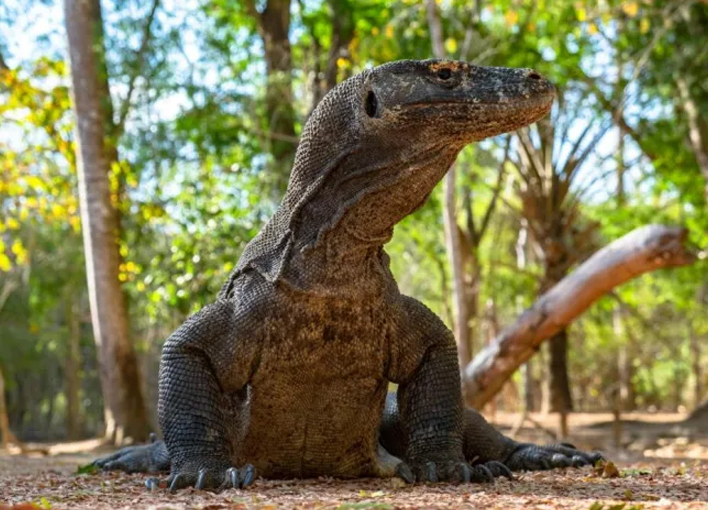
Komodo dragons (Varanus komodoensis) are the world’s largest living lizards, growing up to 10 feet long and weighing more than 300 pounds. Native exclusively to five islands in Indonesia, these ancient reptiles have evolved in isolation for millions of years, developing unique hunting strategies and sensory adaptations. Their fearsome reputation is well-earned—they are apex predators capable of taking down prey much larger than themselves, including water buffalo, deer, and pigs. Unlike most reptiles, Komodo dragons actively hunt rather than ambush, requiring sophisticated sensory systems that allow them to track prey over vast distances through diverse terrain.
The Myth vs. Reality of Blood Detection
The popular claim that Komodo dragons can smell blood from miles away is somewhat exaggerated, though based on genuine biological capabilities. While these reptiles do possess extraordinary olfactory abilities, the actual maximum distance for blood detection is likely closer to 2.5 miles (about 4 kilometers) under ideal conditions. This is still remarkably impressive compared to most other animals. The perception of their abilities has been amplified in popular culture, partly because witnesses have observed dragons converging on injured animals from seemingly impossible distances. Scientific studies have confirmed their exceptional chemosensory abilities while providing a more nuanced understanding of how these senses actually function.
The Vomeronasal Organ: Their Secret Weapon
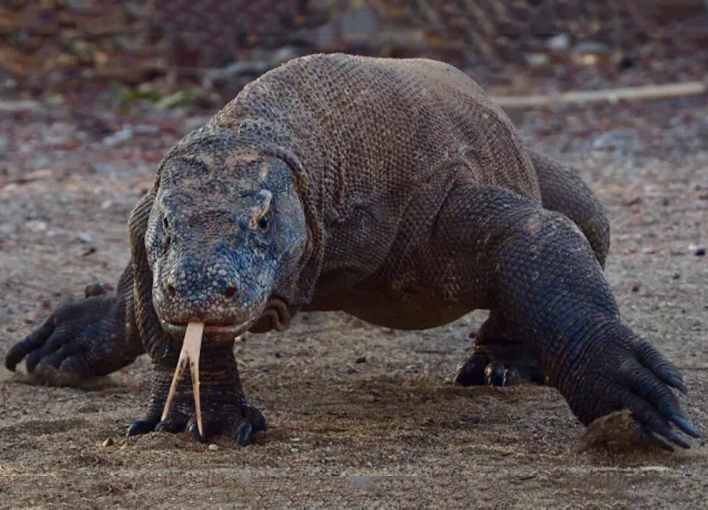
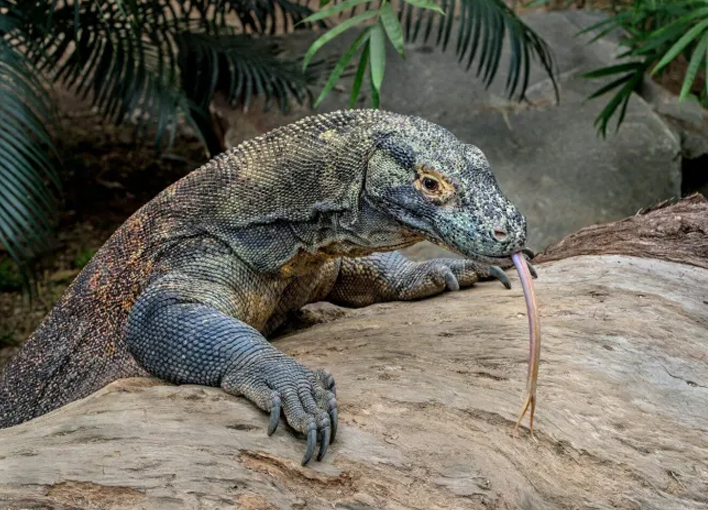
The key to the Komodo dragon’s remarkable sensing abilities lies primarily in an organ that humans don’t possess—the vomeronasal organ (VNO), also known as Jacobson’s organ. Located in the roof of the mouth, this specialized sensory organ is dedicated to detecting chemical signals and pheromones. Unlike the regular olfactory system that detects airborne particles, the vomeronasal organ specializes in analyzing chemical compounds. When a Komodo dragon flicks its forked tongue, it’s collecting chemical particles from the air and ground, which are then delivered to this organ for analysis. The information gathered provides the dragon with detailed data about potential prey, including species identification, direction of travel, and even the health status of the animal.
The Remarkable Forked Tongue
The Komodo dragon’s tongue is perhaps its most visible and distinctive sensory tool. The deeply forked design serves a crucial function in chemical detection, allowing for sophisticated directional sensing. When the lizard flicks its yellow forked tongue into the air, each fork collects scent particles independently. This bifurcated design enables the brain to compare the concentration of particles from each fork, creating a gradient that indicates the direction of the scent source. Komodo dragons can flick their tongues up to 12 times per minute when actively tracking prey. This constant sampling provides continuous updates on the location of blood trails or injured animals, allowing the predator to follow prey even when visual contact is lost.