Cosmology Says Time Itself Had a Beginning – and the Question of What Existed Before It Cannot Be Answered Because Physics Requires Time to Even Ask the Question
If you have ever stared at the night sky and wondered what came before everything, you are not alone. Your mind almost automatically tries to rewind the universe like a movie, frame by frame, back to some first scene, and then you want to ask what happened before that. But modern cosmology quietly delivers a shocking twist: the very concept of “before” may simply not exist when you go back far enough.
In other words, your most natural question might actually be meaningless in the strict language of physics. Time, according to the best models you have today, is not an endless line stretching forever into the past. It had a beginning. And because physics needs time as a built-in ingredient to even phrase a question, asking what was “before” time is like asking what is north of the North Pole. You feel the pull of the question emotionally, but nature might not owe you an answer.
The Big Bang: A Beginning to Time, Not Just to Stuff
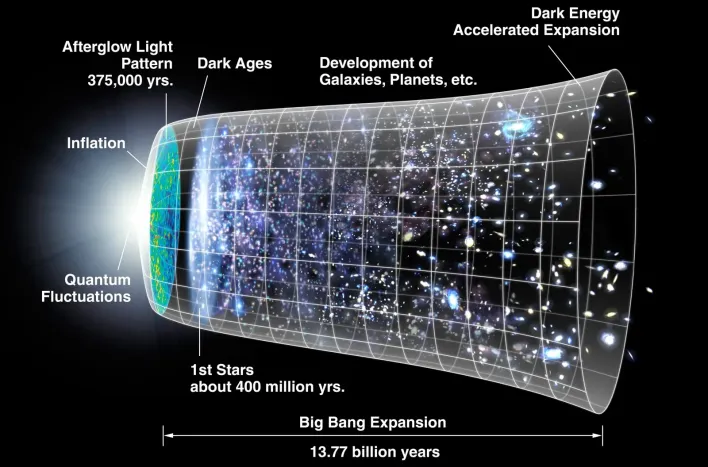
When you hear “Big Bang,” you probably imagine a huge explosion flinging matter into empty space. That mental movie is simple and vivid, but it is also wrong in one crucial way. In the standard cosmological model, you are not just talking about matter expanding into space; you are talking about space and time themselves stretching and coming into existence as the universe evolves.
Run the clock backward using Einstein’s general relativity and the equations tell you that the universe was once unimaginably hot, dense, and compressed. As you move closer to that initial state, the notion of ordinary time starts to break down, because the math pushes you toward a singularity where the theory itself fails. You are not looking at a fireball inside an already existing cosmic room; you are looking at the moment when the room, the clock on the wall, and the very idea of “earlier” and “later” all emerge together.
Why “Before Time” Is a Question Physics Cannot Formally Handle
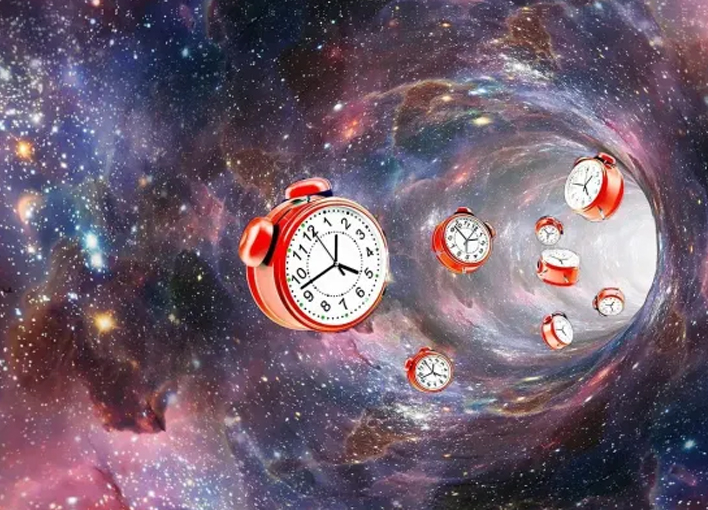
To do physics, you need a stage: some kind of spacetime in which events can happen, clocks can tick, and equations can track how things change. Time is baked into how you write almost every law in physics, whether as a time derivative, a sequence of states, or a cause leading to an effect. Without time, those terms evaporate, and your mathematical language suddenly has no verbs, only nouns.
So when you ask what existed before time began, you are using a word that presupposes time in the first place. “Before” describes a relationship between two moments, one earlier and one later, and if there is no timeline at all, that relationship cannot be defined. You are basically asking what color is beyond the edge of the color spectrum, or what lies one step past the last number. Your intuition wants an answer, but your current physical theories are not built to even frame that as a well-posed problem.
How General Relativity Turns Time into a Flexible Ingredient
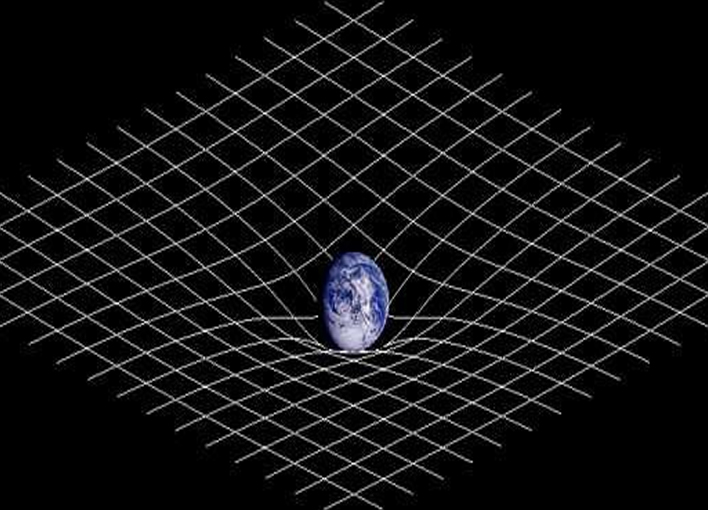
Einstein’s general relativity changed your understanding of time from something absolute and universal into something woven together with space. Instead of a rigid stage, you get a dynamic fabric that can curve, stretch, and ripple. In this picture, gravity is not a force pulling you down; it is the shape of spacetime telling matter how to move, and matter telling spacetime how to curve.
Because of that, time near a massive object or in a strong gravitational field does not pass the same way it does for you sitting comfortably at sea level. Atomic clocks on satellites run at slightly different rates than clocks on the ground, and you rely on that fact for technologies like GPS to work accurately. If time can be stretched, slowed, and bent by energy and mass, then it is not surprising that, at extreme conditions like those close to the Big Bang, your usual understanding of time would crumble completely.